Coolant leaks are one of those car problems that can start small and turn serious fast. A little puddle under the car may not seem like much at first. Maybe you notice the temperature gauge creeping up a little more than usual. Maybe there is a sweet smell after you park. A lot of drivers hope it is minor and put it off for a little while. We understand that. But when it comes to coolant leaks, waiting usually does not make life easier.
At our shop, we take coolant leaks seriously because the cooling system is what keeps your engine from overheating. When coolant escapes, the engine loses part of its ability to control temperature. If the leak gets worse or the coolant level drops too far, what starts as a repair to a hose or radiator can become overheating, engine damage, and a much bigger bill.
The good news is that coolant leaks usually leave clues before things get that far. The better news is that once we find the real source, there is usually a clear path to fixing it properly. The key is not guessing and not ignoring the signs.
What Coolant Actually Does
Coolant does more than just keep the engine from getting too hot. It circulates through the engine and radiator to help manage temperature, prevent freezing in cold weather, and protect cooling system components from corrosion. It is one of the most important fluids in the vehicle, and when it leaks out, the whole system becomes less effective.
That is why even a slow coolant leak matters. You may not notice a dramatic problem right away, but the engine is losing protection every time the coolant level drops. If the leak is small, it can be tempting to just top it off and move on. But the leak is still there, and it usually gets worse with time.
The Most Common Signs Of A Coolant Leak
A lot of drivers are not sure what coolant leakage actually looks like. Sometimes it is obvious. Sometimes it is not. A few of the most common warning signs include:
- A bright green, orange, pink, or yellow puddle under the vehicle
- A sweet smell after driving
- The engine temperature running hotter than normal
- A low coolant warning light
- Steam from under the hood
- Needing to add coolant more often than you should
Not every vehicle uses the same coolant color, so the exact shade can vary. What matters more is noticing that a fluid is leaking and the cooling system level is dropping.
Worn Or Cracked Hoses
One of the most common causes of coolant leaks is a worn hose. Cooling system hoses carry hot coolant between the engine, radiator, heater core, and other components. Over time, those hoses can dry out, soften, swell, crack, or loosen at the connections.
This is especially common in older vehicles or cars that have been exposed to lots of heat cycles over the years. Rubber does not last forever, and under-hood temperatures are tough on it.
When we fix a leaking hose, we do not just swap the hose and send the car on its way without looking around. We inspect the hose clamps, the condition of nearby hoses, and the overall cooling system health. If one hose has failed because of age, another may not be far behind.
Radiator Leaks
Radiators are another common leak point. They deal with constant heat, pressure, vibration, and exposure to road debris. Over time, the radiator can develop cracks in the plastic tanks, leaks at the seams, or damage from corrosion and impact.
Radiator leaks can be sneaky because they may start out small. You might only notice a few drops on the driveway or a low coolant level every now and then. Then one hot day or one long drive makes the leak worse, and suddenly the engine starts overheating.
When we diagnose a radiator leak, we check whether the radiator can realistically be repaired or whether replacement is the smarter long-term fix. In many cases, especially with modern plastic-and-aluminum radiators, replacement is the better answer.
Water Pump Failure
The water pump plays a major role in moving coolant through the engine and radiator. If it starts leaking, the cooling system can lose coolant and circulation at the same time, which is not a combination you want to ignore.
Water pumps can leak from seals, gaskets, or weep holes as they wear out. Sometimes the leak is accompanied by noise or wobble. Other times, the first clue is simply coolant loss and overheating risk.
A leaking water pump is not the kind of issue that gets better on its own. When we find one, the repair usually involves replacing the pump, checking related components, and making sure the cooling system is properly refilled and bled afterward.
Bad Radiator Cap Or Reservoir Issues
This is one of the more overlooked causes of coolant loss. The radiator cap helps maintain the proper pressure in the cooling system. If it is not sealing correctly, coolant may escape or the system may not pressurize the way it should. Coolant reservoirs can also crack or leak at seams and fittings.
Because these parts are less dramatic than a radiator or hose, drivers sometimes do not think of them right away. But they absolutely can cause coolant loss and temperature problems.
If the issue turns out to be a faulty cap or a damaged reservoir, that is often a more straightforward repair than some of the bigger cooling system failures. The important part is confirming the real source so the right part gets replaced.
Thermostat Housing Leaks
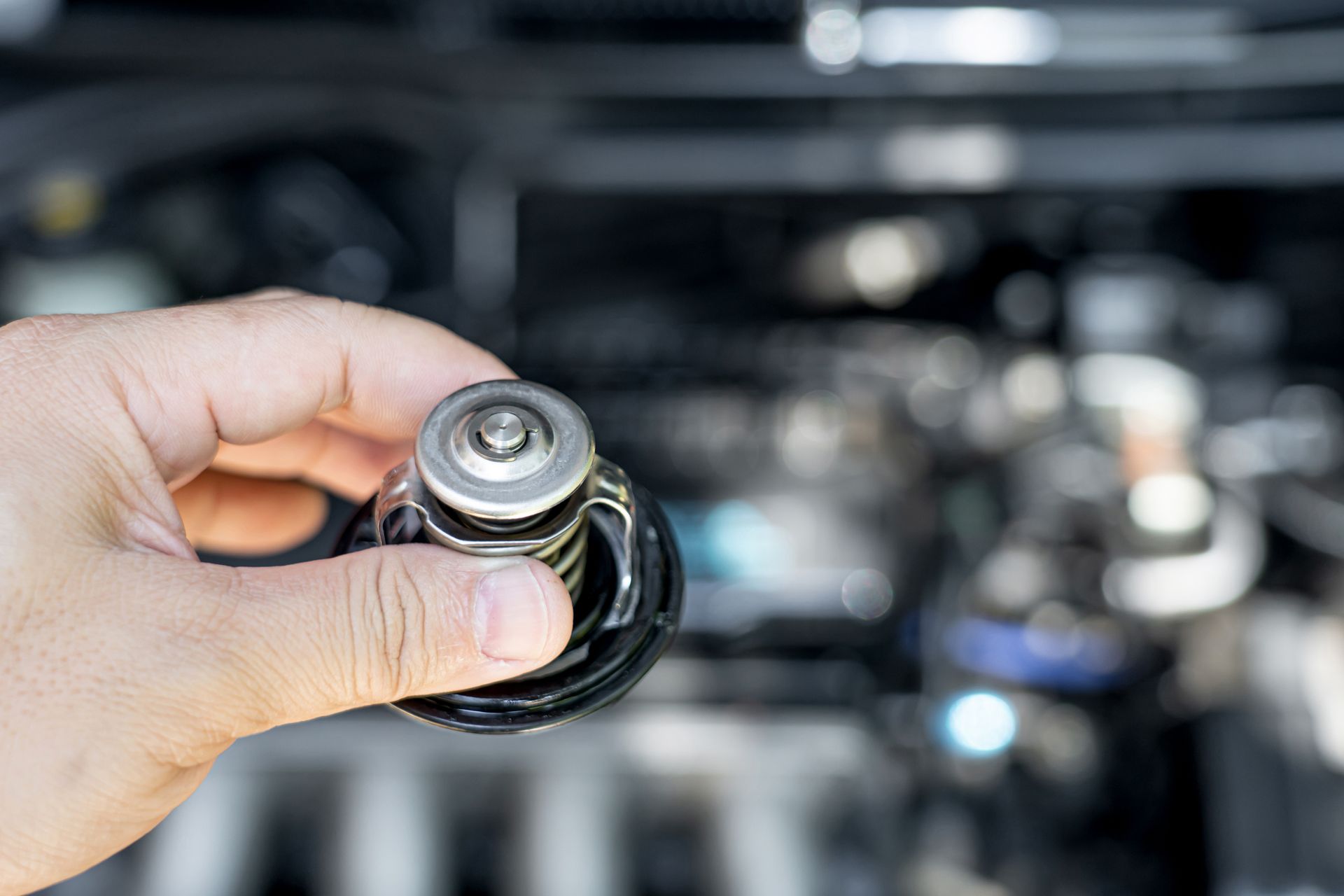
On many vehicles, the thermostat sits inside a housing that connects to coolant passages and hoses. That housing may be plastic, metal, or a combination of materials. Over time, it can crack, warp, or leak around the gasket or seal.
We see this fairly often on vehicles where plastic cooling system components have become brittle with age. The thermostat itself may also be part of the issue if it is sticking or failing, but the external leak often comes from the housing or seal.
When we repair this kind of leak, we usually inspect both the housing and thermostat together. It often makes sense to address both at the same time rather than only replacing the visibly leaking part and leaving an aging thermostat behind.
Heater Core Or Heater Hose Leaks
Not every coolant leak shows up outside the vehicle. Sometimes the leak is tied to the heater core or heater hoses. If that happens, you may notice coolant smell inside the cabin, fogging on the windows, damp carpet, or poor heater performance.
This kind of leak can be especially frustrating because it is less visible than a puddle under the car. Drivers may not realize the heater system is tied to the cooling system in a way that can create interior symptoms.
When we suspect a heater-related leak, we trace it carefully. Heater core repairs can be more involved than hose replacements, but catching the issue early still matters because coolant loss is coolant loss, no matter where it happens.
Intake Manifold Gasket Or Engine Gasket Leaks
Some coolant leaks are more serious because they involve engine sealing surfaces rather than external hoses or components. Intake manifold gasket leaks and head gasket problems can allow coolant to escape externally or, in some cases, internally.
This is where accurate diagnosis matters most. A driver may notice unexplained coolant loss, overheating, white exhaust smoke, or milky oil. Those signs require attention right away because internal coolant leaks can lead to major engine damage.
We never jump straight to the worst-case conclusion, but we also do not ignore the possibility when the symptoms point in that direction. If the leak is gasket-related, the repair plan depends on exactly where the failure is and how far it has progressed.
How We Find The Leak
Coolant leaks are not always obvious at first glance. Sometimes the leaked coolant has dried up. Sometimes it only leaks when the engine is hot or under pressure. That is why proper diagnosis matters more than guesswork.
At our shop, we look for the actual source instead of just replacing the first damp-looking part. Depending on the situation, diagnosis may include:
- Visual inspection of hoses, radiator, reservoir, and fittings
- Pressure testing the cooling system
- Checking for dried coolant residue
- Inspecting the water pump and thermostat housing
- Looking for signs of internal engine leakage
- Evaluating overall cooling system condition
This matters because coolant can travel. A drip may land in one place while the leak actually started somewhere else higher up. We want to fix the cause, not just the symptom.
How We Fix It The Right Way
The repair depends on what failed, but our goal is always the same: stop the leak, restore proper cooling system function, and make sure the system is ready to protect the engine again. That may mean replacing a hose, radiator, water pump, cap, thermostat housing, reservoir, or gasket. After the repair, we refill the system with the correct coolant, bleed out any trapped air, and verify that the system holds pressure and maintains proper operating temperature.
We also pay attention to the bigger picture. If one cooling system part has failed because of age or wear, it is worth checking whether nearby components are showing the same kind of deterioration. That helps prevent repeat visits for the next weak link.
Coolant Leak Repair at B & B Automotive Inc
A lot of the worst cooling system stories start with something small that got dismissed. If you suspect a coolant leak, please do not hesitate to visit B & B Automotive Inc. We can find the source of the leak, repair it properly, and make sure your cooling system is ready to protect your engine.
Call us today or stop by
B & B Automotive Inc in Aberdeen, WA to schedule a cooling system inspection.