An oxygen sensor can trigger a check engine light, affect fuel control, or appear in a trouble code, but that does not automatically mean the sensor itself has failed. The sensor is constantly reacting to what is happening inside the engine and exhaust system, so problems elsewhere can make a good sensor look bad.
Before replacing an O2 sensor, technicians usually compare its signal with actual engine operation. That means looking at scan data, checking how quickly the sensor responds, inspecting the wiring, and ruling out problems such as exhaust leaks, misfires, vacuum leaks, or fuel delivery concerns.
Start With the Trouble Code, but Do Not Stop There
A diagnostic trouble code can tell you which sensor or circuit the engine computer is concerned about. The code may point to slow response, heater performance, a circuit fault, or a fuel mixture that is too rich or too lean.
The code is a direction for testing, not proof that the sensor needs replacement. A lean code, for example, may be caused by a vacuum leak or low fuel pressure. A rich code may come from a leaking injector or another fuel control problem. Replacing the sensor without checking the cause can leave the original problem unchanged.
Live Data Shows How the Sensor Is Behaving
A scan tool allows technicians to watch oxygen sensor information while the engine is running. On older narrowband sensors, the upstream signal usually changes repeatedly as the engine computer adjusts fuel delivery.
If the signal stays fixed, reacts unusually slowly, or does not respond when engine conditions change, the sensor may be failing. However, technicians also compare fuel trims and other data to make sure the engine is not truly stuck in a rich or lean condition.
Wideband Sensors Need Different Testing
Many newer vehicles use wideband air-fuel ratio sensors instead of traditional narrowband oxygen sensors. These sensors provide more precise mixture information and often display data differently on a scan tool.
Instead of watching for a simple voltage change, a technician may look at lambda, current, or another manufacturer-specific value. The expected readings depend on the vehicle, so testing has to follow the correct service information rather than using the same method on every sensor.
A Response Test Can Reveal a Weak Sensor
An oxygen sensor can still produce a signal and be too slow to work properly. As sensors age or become contaminated, their reaction to changes in the exhaust can become sluggish.
Technicians can create a controlled rich or lean condition and watch how quickly the sensor responds. If the engine mixture clearly changes but the sensor is slow to follow, that provides stronger evidence that the sensor is worn. A healthy sensor should respond promptly when exhaust oxygen changes.
The Heater Circuit Has to Work Correctly
Modern oxygen sensors contain an internal heater that quickly brings the sensing element up to operating temperature. Without the heater, the sensor may take too long to become active after startup or may struggle to stay hot enough during idle.
A heater problem may come from the sensor, but a fuse, damaged connector, wiring problem, or poor ground can also cause it. Electrical testing helps determine whether the heater inside the sensor has failed or whether the problem is elsewhere in the circuit.
Check for Exhaust Leaks Before Replacing the Sensor
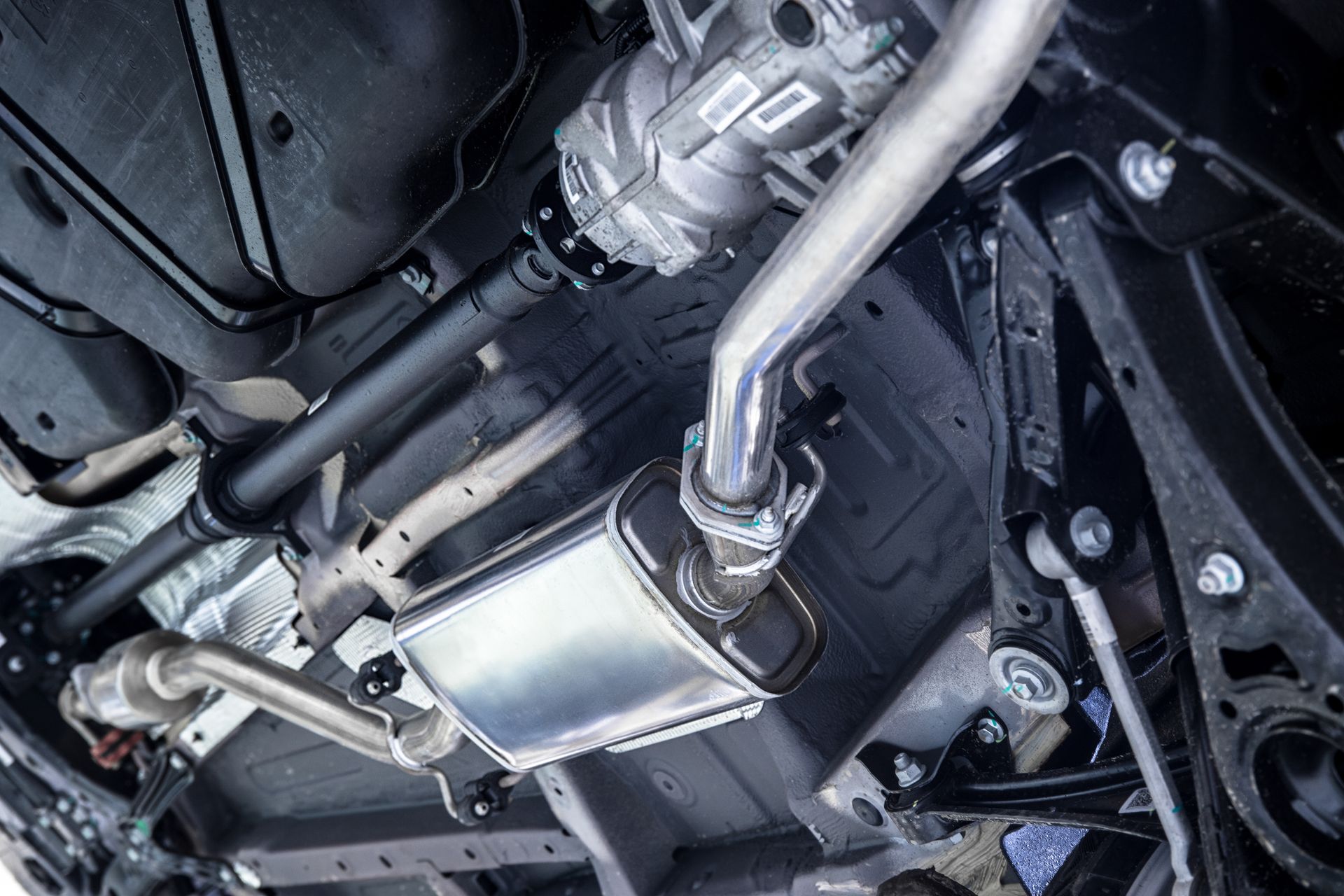
An exhaust leak can introduce outside air near the oxygen sensor. That extra oxygen may cause the sensor to report a lean condition even when the engine's actual fuel mixture is not the problem.
Leaks around an exhaust manifold, gasket, flange, flex section, or nearby pipe can affect sensor readings. Some leaks are small enough that they are difficult to hear, especially once the engine is warm. An inspection or smoke test may be needed to find them.
Other Engine Problems Can Change O2 Readings
An oxygen sensor reports what it sees in the exhaust. If a cylinder is misfiring, an injector is leaking, fuel pressure is low, or unmetered air is entering through a vacuum leak, the sensor signal will change in response.
Common problems that can influence O2 readings include:
- Engine misfires
- Vacuum leaks
- Low fuel pressure
- Leaking fuel injectors
- Exhaust leaks
- Excessive oil consumption
- Coolant entering a combustion chamber
This is why sensor data needs to be interpreted along with the rest of the engine information. A sensor can be working correctly while reporting a problem caused by another system.
Wiring Damage Can Make a Good Sensor Look Faulty
Oxygen sensors are mounted in or near the exhaust, so their wiring is exposed to heat, water, road debris, and vibration. Melted insulation, loose terminals, corrosion, or a damaged connector can interrupt the signal or heater circuit.
Technicians inspect the wiring closely and test power, ground, and signal circuits when necessary. Replacing the sensor will not repair a broken wire or corroded terminal, so electrical checks can prevent unnecessary parts replacement.
Sensor Contamination Can Affect Accuracy
Oil burning, coolant contamination, excessive fuel, and certain deposits can coat the sensing element over time. A contaminated sensor may respond more slowly or produce inaccurate readings even though the electrical circuit still works.
If contamination is found, the source needs attention too. Replacing the sensor without correcting oil burning, coolant entry, or another underlying engine problem may cause the new sensor to become contaminated again.
Compare the Sensor With the Rest of the System
Upstream and downstream oxygen sensors have different jobs. The upstream sensor is mainly involved in fuel control, while the downstream sensor is commonly used to monitor catalytic converter operation.
A downstream sensor that begins behaving too much like the upstream sensor may point toward a catalytic converter efficiency concern rather than a bad downstream sensor. Looking at both signals together can provide valuable information about whether the sensor, engine, or converter is responsible.
Get Oxygen Sensor Testing in Aberdeen, WA, With B & B Automotive Inc
B & B Automotive Inc in Aberdeen, WA, can test oxygen sensor response, heater circuits, wiring, fuel trims, exhaust leaks, and related engine conditions before recommending sensor replacement.
If your check engine light is on or an O2 sensor code has returned,
contact us to schedule diagnostic testing and service.